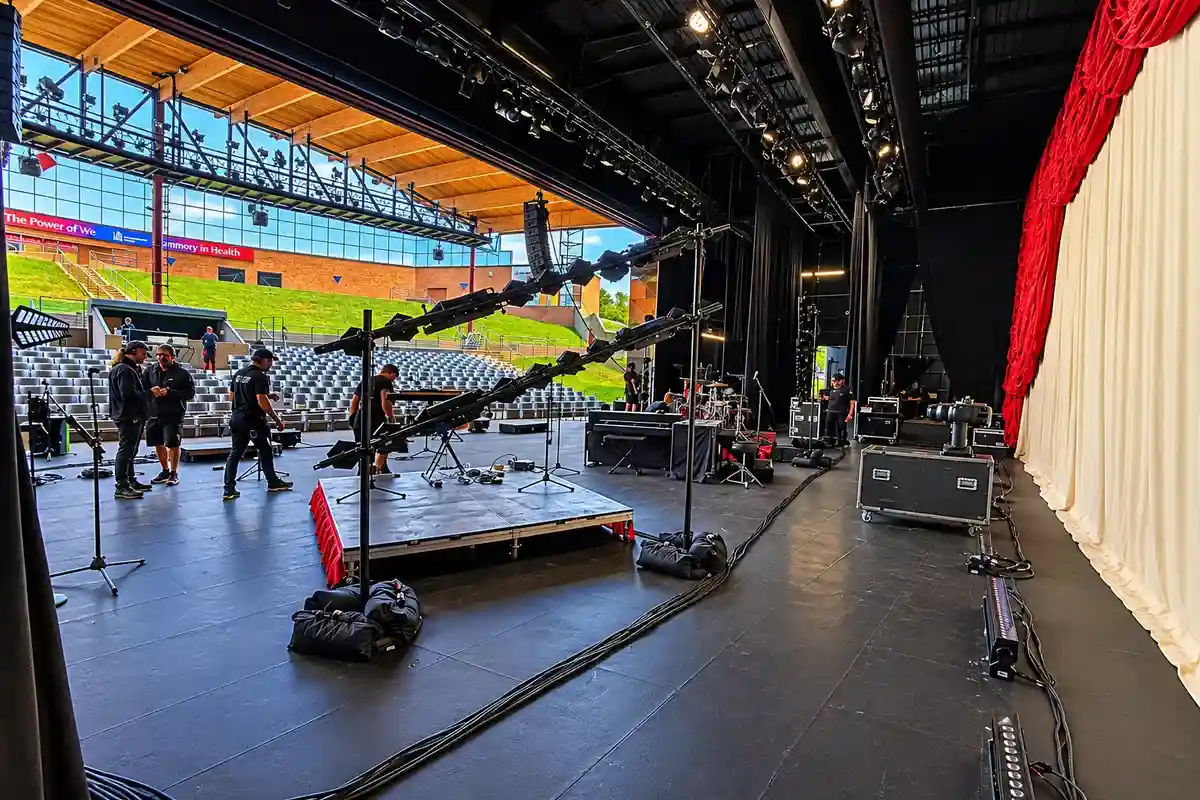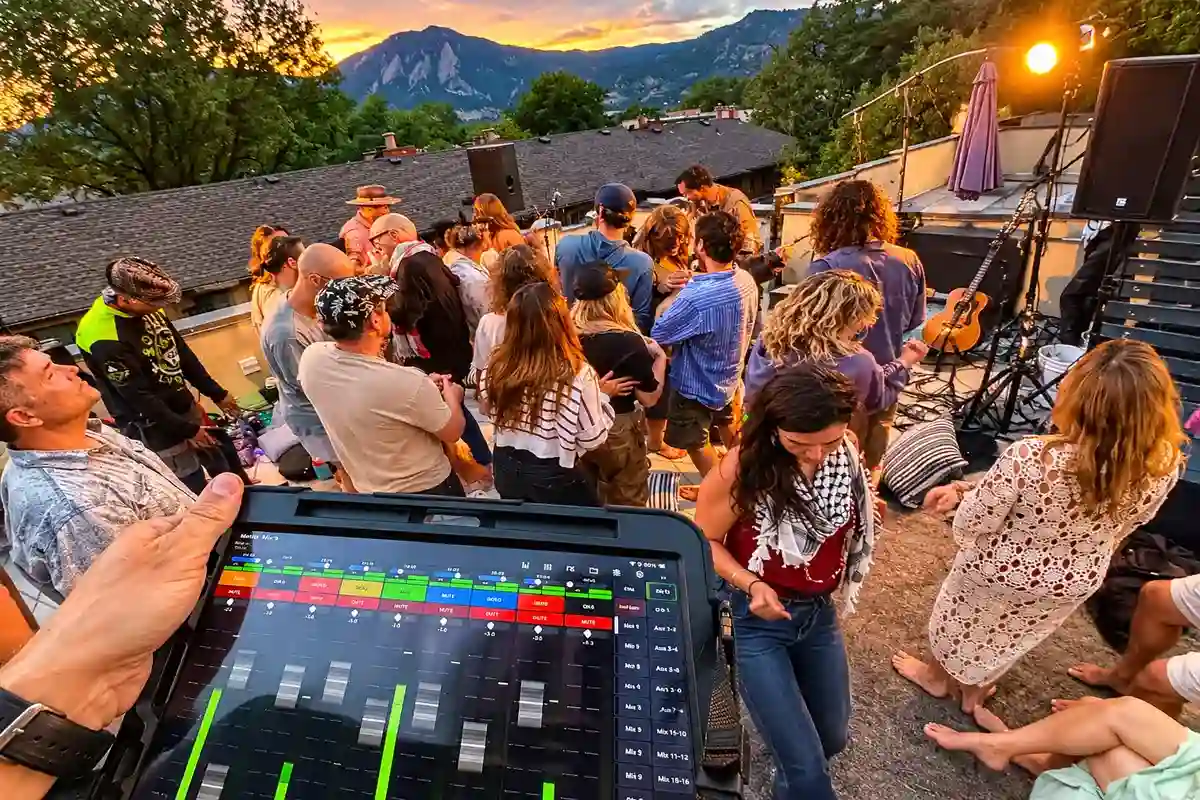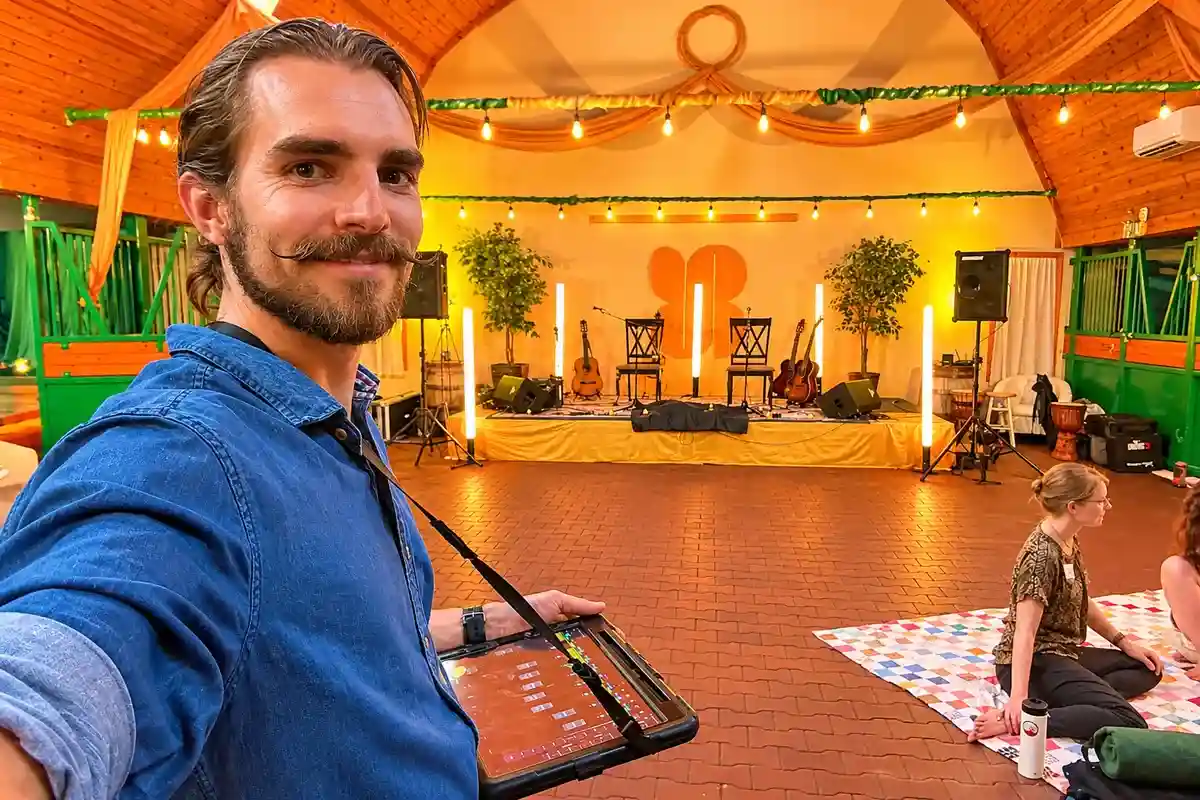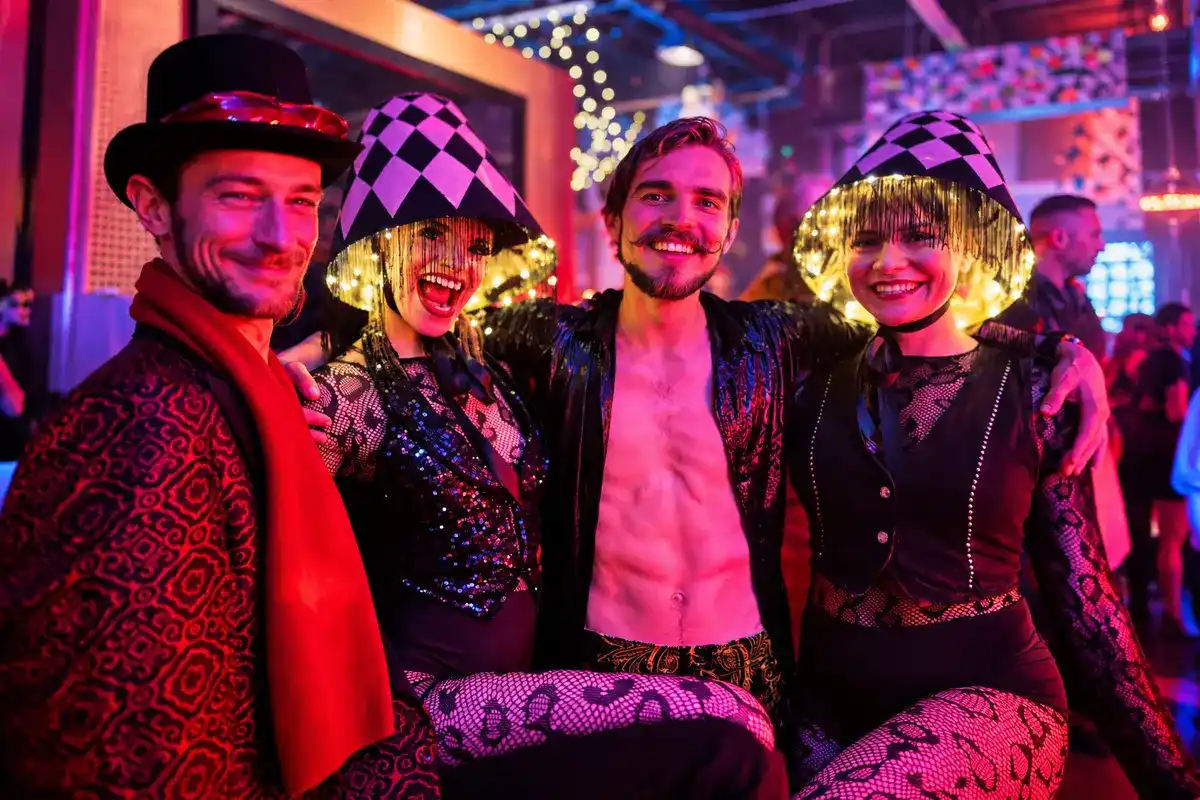
Picture it. The plates are cleared and the room goes quiet. A scholarship recipient steps to the podium to share what the fundraiser made possible, and every guest, even at the table by the back wall, hears her voice catch on the last line. Moments like that are what M3DIUM Productions builds gala lighting and sound design around. For a themed gala, the plan has two phases: soft theme colors and clear, even speech audio through dinner and the program, then full color and dance volume once the floor opens. When one team runs both, that switch lands on cue.
Quick Facts — Best for: galas, fundraisers, themed parties – Event size: 50-800+ guests – Typical package: Professional 1,200-3,500 – Booking window: 2-4 weeks in peak season – Quote reply: within 24 hours – Service area: Boulder and the Front Range
What does a themed gala need for lighting and sound?
On the sound side, a gala needs speakers sized to the room, a podium mic, wireless microphones for anyone who moves, quiet music for cocktails and dinner, a DJ for dancing, and an engineer mixing for the entire night. On the lighting side, most galas need uplighting to carry the theme across the walls and dance floor lighting for the second half.
If the venue has its own sound system, M3DIUM’s DJ Only option can connect to it. First ask whether that system reaches every table and works with wireless mics. If the evening needs a host, M3DIUM also offers MC services.
How should the sound be set up for speeches and an auction?
Why does speaker placement matter more than volume?
In an open space, sound drops about 6 decibels each time the distance from a speaker doubles, and indoors, walls and ceilings change that further. That is why two big front speakers turned up for the back tables can overwhelm the front ones. Depending on the room’s size, shape, and acoustics, good speaker placement may mean a distributed setup with several speakers spread through the room, so coverage stays even without making the front tables uncomfortably loud. In a gala sound system, the goal is clear, consistent speech at every table, not simply more volume. M3DIUM’s engineers tune the system to the venue before guests arrive, so voices stay clear instead of boomy.
How is feedback prevented?
Feedback is a loop: a mic picks up its own sound from a speaker and amplifies it again. Whenever the layout allows, position the main speakers in front of the microphones and keep the mics from pointing toward the speakers. A sound check before guests arrive is the time to catch it.
Which microphones does a gala need?
Plan for a podium mic for scripted speeches, a handheld wireless for the emcee or auctioneer, a lavalier for a presenter who walks the stage, and a charged spare. A lavalier works best clipped at the center of the chest, about a hand’s width below the chin, away from jewelry. M3DIUM’s inventory covers handheld, lavalier, and headset mics, so a panel or audience Q&A needs no extra vendor.
Why does an auction need a live engineer?
The auction puts fundraiser gala audio under the most pressure. A soft spoken board chair and a fast, loud auctioneer often speak back to back, at very different levels, while the room gets louder with every bid. An engineer adjusts in real time, catches feedback, and hands over the spare if a battery dies mid bid. When every guest hears every bid, the paddle raise feels like a shared moment instead of a sale.
What if the gala has a live band or performer?
Performers need stage monitors to hear themselves, and instruments need DI boxes for a clean connection to the mixer. M3DIUM supplies both, and its engineers handle front of house and monitor mixing for bands, speakers, and hybrid setups.
How do you match the music to the theme?
During cocktails and dinner, let the theme lead the music: swing and jazz era recordings for a 1920s gala, soft instrumentals for a winter one, at a volume guests can talk over. Once dancing starts, shift to songs most guests know, with a few that still nod to the theme. Send the DJ must play and do not play lists a week ahead.
What lighting brings a gala theme to life?
How does uplighting work?
Uplighting fixtures sit on the floor at the base of walls and columns and throw a color wash upward. LED fixtures mix colored light to reach a wide range of shades, which makes themed event lighting flexible: gold and amber for a 1920s gala, icy blue and white for a winter one, deep purple and red for a masquerade. The number of fixtures depends on walls, columns, and alcoves, not guest count, so send the floor plan or photos and M3DIUM can size it in advance.
What light works best during dinner?
Warm white light, around 2700 to 3000 Kelvin, sits close to the glow of a household incandescent bulb and flatters food and faces. Heavily saturated color does the opposite, which is why dinner calls for a softer version of the theme palette and a warm light on the podium. It matters on camera too: M3DIUM also shoots multi camera footage and recap films, and lights them so faces look natural.
Should a gala use fog or haze?
Haze and fog make light beams visible. M3DIUM’s DJ and sound package can include a smoke machine, but some venues ban fog and haze because they can set off smoke detectors, so get the venue’s answer in writing before building a look around it.
How should lighting and sound change from dinner to dancing?
| Element | Dinner and Program | Dancing |
| Lighting | Soft theme colors, warm light on the podium | Full theme colors |
| Brightness | Low, but plates and faces visible | Dark room, lit dance floor |
| Music | Low enough for conversation | Full DJ set with subwoofers |
| Microphones | Podium, handheld, lavalier | One handheld for announcements |
| Engineer’s focus | Clear speech, no feedback | Volume and crowd energy |
A run of show listing speakers, the auction, and the first dance tells the team when to make each change. That switch is the emotional turn of the night. Guests who spent two hours seated feel the room open up when the colors deepen and the bass comes in, but only if lights and sound move together.
When should the lighting change at a Boulder gala?
Sunset decides it. In 2026, Boulder’s latest sunset falls around 8:35 at night in late June, and the earliest around 4:37 in the afternoon in early December. In a room with large windows, colored light barely shows until it’s dark outside, so a summer gala’s big lighting moment may land during dessert rather than cocktails. Schedule the color change, or the top auction item, for after dark, when it feels like the night opening a second time.
What should be confirmed with the venue first?
Ask whether the overhead lights dim. If they don’t, they will wash out the wall colors, and no amount of extra gear fixes that. Confirm how much setup time is available before doors open. For an outdoor or tent gala, confirm where power is available, and for a live streamed gala, ask about a reliable internet connection, ideally a wired one.
What happens on the day of the gala?
M3DIUM delivers the gear and sets it up before guests arrive. Backup gear comes standard with its DJ services, so one failed cable or speaker doesn’t stop the night, and the engineer stays on site from the first mic check to the last song. Name one planner as the day’s point of contact.
Why does one team for lighting, sound, and video make a difference?
Separate vendors mean separate contacts and setup plans. M3DIUM works the opposite way: a four in one model with the DJ, the live sound engineer, the AV and PA gear, and the videographer under one roof and one point of contact.
Founder Jordan Groth is both a DJ and a sound engineer, and the company started out providing professional audio and lighting for live events before growing into full production. M3DIUM has produced more than 600 events over more than 8 years, from 50 guest gatherings to 800 person productions, and holds a 5.0 Google rating across more than 100 reviews. Front Range venues it lists include Avalon Ballroom, Boulder JCC, and Junkyard Social Club, and its own themed Magic Portal Parties make designing around one concept regular work.
How much does gala lighting and sound cost in Boulder?
Most galas fit M3DIUM’s Professional package, $1,200 to $3,500, built for mid size weddings, fundraisers, and corporate events with a full system, subwoofers, stage monitors, and expanded mic options. Large productions that need a full crew, multi zone coverage, and advanced mixing move to Premium, which starts at $2,000 and is priced by production scope. A gala with a remote audience fits Conference and Live, $3,000 to $10,000, which adds podium and lavalier mics, audience Q&A, recording, and live streaming. Teams that only need equipment can rent gear on its own, delivered and set up or picked up, with an on site technician as an add on.
Ready to bring your gala theme to life?
A themed gala works best when the colors, the music, the speeches, and the switch from dinner to dancing all come from one plan. Request a free quote at m3diumproductions.com/connect with the theme and color palette, venue, guest count, a rough run of show, and any auction, performer, or live stream. M3DIUM will design the lighting and sound around that theme, so the night feels as good as it looks, and usually replies within 24 hours. To talk it through first, call Jordan at (720) 893-1933 or email hello@m3diumproductions.com.
Frequently Asked Questions
Uplighting throws a color wash across walls and columns and sets the theme for the whole room. Dance floor lighting covers the dancing area and adds movement.
If the night includes speeches, an auction, or live performers, a dedicated engineer keeps every voice clear. M3DIUM’s founder is both a DJ and a sound engineer, so both skills come from one team.
Yes. Bring the palette or invitation design to the planning call, then check the colors in the room during setup.
Yes. M3DIUM’s Conference and Live package includes live streaming and recording. Confirm a reliable internet connection with the venue first.
Yes. It serves the Front Range, from Fort Collins and Estes Park to Denver and Colorado Springs.
At least one week out. During peak season, which M3DIUM describes as summer weddings and festivals, two to four weeks ahead is ideal.
The date, venue, and guest count are enough to start. Adding the theme, run of show, and auction plans makes the quote more accurate.